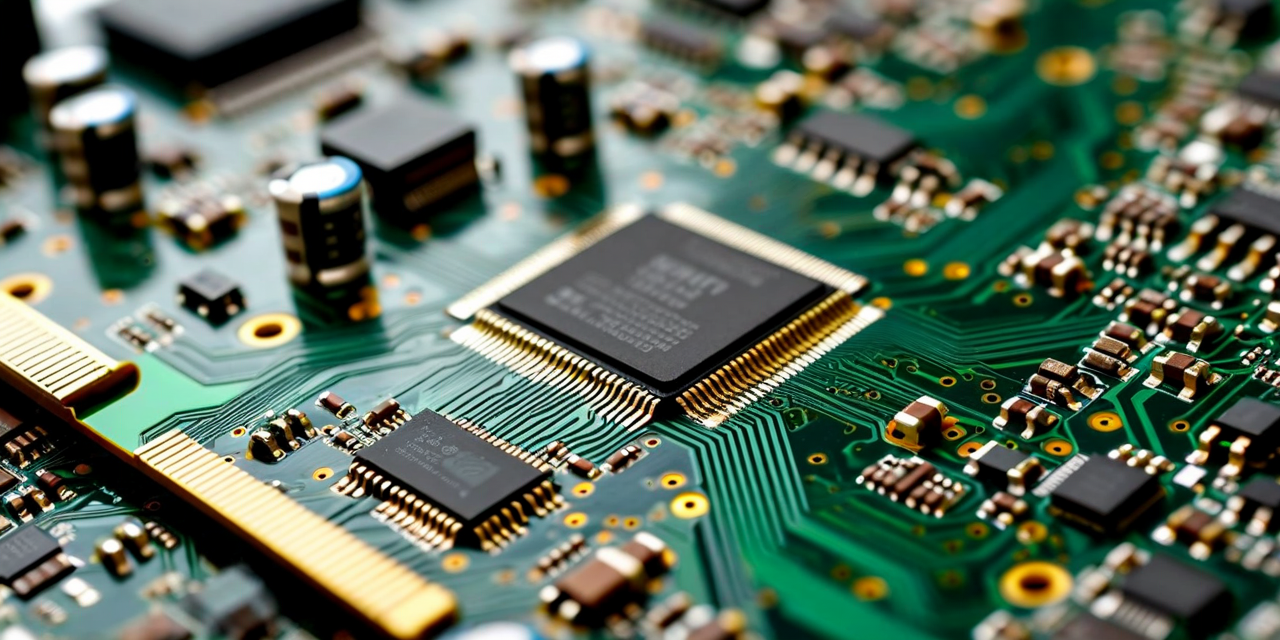
The GPU scarcity that defined AI infrastructure in 2022 and 2023 is giving way to a more nuanced compute market. Supply has expanded significantly, procurement options have multiplied, and the competitive dynamics among GPU cloud providers have shifted the conversation from availability to efficiency. For AI infrastructure startups, this transition creates a new set of opportunities — and closes some that existed during the scarcity period.
From Scarcity to Efficiency
The GPU shortage of 2022 and 2023 was real and consequential. Companies that had planned AI development timelines around compute availability found themselves unable to access the hardware they needed, and the shortage created a premium market for GPU time that rewarded whoever could secure inventory. In this environment, GPU cloud providers competed primarily on availability — the ability to deliver compute on short notice at any price — and customers were willing to accept significant inefficiency in exchange for access.
The market has changed substantially. NVIDIA's production cadence has accelerated. AMD's GPU offerings have matured into viable alternatives for several workload categories. A new category of hyperscale GPU cloud providers — companies that aggregate large GPU fleets and resell capacity with features that raw cloud providers do not offer — has emerged with significant inventory and competitive pricing. And hyperscalers have increased their own GPU inventories substantially, making cloud GPU time available at scale with greater reliability than was possible eighteen months ago.
This supply expansion does not mean compute has become cheap. The cost of GPU time for large-scale training and inference remains significant, and the economics of AI infrastructure are still heavily influenced by compute costs. But it means that availability is no longer the binding constraint it was. The new constraint is efficiency — the ability to use available compute productively, to minimize waste, to match workload requirements to hardware characteristics, and to optimize the total cost of AI operations over time.
The Software Layer Opportunity
When hardware availability is the primary constraint, the most valuable companies are those that control access to hardware. When efficiency is the primary constraint, the most valuable companies are those that provide software intelligence above the hardware layer. This transition is creating a significant shift in where value accrues in the GPU compute market.
The software layer opportunity in compute encompasses several distinct product categories. Workload scheduling and orchestration platforms that can intelligently route training, fine-tuning, and inference jobs across heterogeneous hardware fleets — maximizing utilization and minimizing idle time — are in increasing demand as organizations manage larger and more complex AI compute footprints. Cost optimization and FinOps tools for AI compute are emerging as a distinct category, distinct from the generic cloud cost optimization tools that have been available for years but insufficiently specialized for the specific patterns of AI workloads.
Hardware abstraction layers that allow AI workloads to run efficiently across different GPU architectures — NVIDIA, AMD, and increasingly purpose-built AI accelerators from companies like Google, Amazon, and several AI chip startups — are becoming increasingly valuable as multi-vendor GPU environments become more common. The ability to write training and inference code once and run it efficiently on any hardware is a capability that large organizations with heterogeneous compute fleets increasingly require, and it is a problem that existing frameworks solve incompletely.
Spot and preemption management tools are a smaller but fast-growing opportunity. The availability of spot GPU instances at significant discounts relative to on-demand pricing creates substantial savings opportunities for workloads that can tolerate preemption. But managing preemptible AI workloads — checkpointing training runs, resuming from interruption, dynamically scaling inference infrastructure — requires sophisticated tooling that most organizations build inefficiently from scratch. Purpose-built spot management tools for AI workloads can deliver significant cost savings with minimal engineering investment, which is an attractive value proposition for a broad range of customers.
The Inference Economics Revolution
The most significant development in GPU compute economics over the past eighteen months is the inversion of the training-to-inference cost ratio for large language model deployments. For classical machine learning, training was computationally expensive and inference was cheap. For production LLM deployments, the inverse is often true. A model trained once generates inference requests continuously for months or years, and the cumulative cost of serving those requests can exceed the training cost by orders of magnitude for widely deployed applications.
This economic reality is reshaping investment priorities across the AI compute market. Inference-optimized hardware — GPUs configured for the specific memory bandwidth and batch processing patterns of LLM inference — commands a premium over general-purpose training hardware. Inference optimization software — quantization tools, speculative decoding implementations, caching systems for common prompt prefixes — has become a high-value software category rather than a niche research topic. And inference cost modeling and optimization has become a strategic priority for any organization deploying LLMs at scale.
The startups best positioned to benefit from inference economics are those that can deliver meaningful, measurable improvements in inference efficiency for standard LLM deployment scenarios. The most successful companies in this space are not selling inference infrastructure broadly — they are selling specific, quantifiable savings on specific model architectures and deployment patterns. This specificity is what creates credible technical differentiation and makes the product easy to evaluate in a competitive procurement process.
Disaggregating the Compute Stack
A structural trend with significant implications for AI infrastructure startups is the disaggregation of the compute stack. Historically, GPU compute providers bundled together several distinct capabilities: raw GPU time, high-speed networking, storage, scheduling infrastructure, and often some degree of ML framework support. The bundle made sense during the period when accessibility was the primary concern — customers wanted a single vendor who could provide everything they needed to run their AI workloads.
As the market matures, more sophisticated customers are disaggregating the bundle. They purchase raw GPU capacity from one or more providers based purely on price and availability, manage their own networking and storage infrastructure, and use purpose-built software tools for scheduling, orchestration, and optimization. This disaggregation creates opportunities for specialized software vendors who can provide specific stack components better than any integrated provider can. It also creates complexity that management and abstraction layer tools can reduce, which is its own business opportunity.
The disaggregation trend is most advanced among the largest and most technically sophisticated AI organizations — the hyperscalers, the frontier model labs, and the largest enterprise AI deployments. It is moving down-market as the tools required to manage disaggregated compute become more accessible, but the mid-market opportunity remains substantial because most organizations are still earlier in this transition and can benefit from abstraction tools that make disaggregation manageable without requiring deep infrastructure engineering expertise.
Alternative Accelerators and the Hardware Diversity Opportunity
NVIDIA has dominated the GPU market for AI training and inference with such overwhelming market share that the term GPU has become practically synonymous with NVIDIA. But the competitive dynamics of the hardware market are shifting. AMD's ROCm platform has matured to the point of genuine viability for several workload categories. Google's TPUs are the preferred hardware for large-scale training at Alphabet and increasingly available to external customers through Google Cloud. Purpose-built inference chips from companies like Groq and Cerebras offer performance advantages for specific inference scenarios. And cloud providers are building their own AI accelerators — AWS Trainium and Inferentia, Google Cloud TPUs, Azure Maia — that offer compelling economics for workloads running within their ecosystems.
This hardware diversity creates both an opportunity and a challenge. The opportunity is for software companies that can unlock the capabilities of non-NVIDIA hardware, enabling AI teams to access lower-cost or better-performing alternatives for specific use cases without the switching costs that hardware vendor transitions typically impose. The challenge is for AI teams trying to maintain portable, hardware-agnostic AI codebases in an environment where hardware-specific optimizations can provide substantial performance advantages.
We believe the hardware diversity opportunity will produce several significant software companies over the next three years. The companies best positioned to capture this opportunity are those with deep hardware architecture expertise who can build software abstraction layers that expose hardware-specific performance while maintaining portability — a technically demanding goal that is also commercially very valuable.
Key Takeaways
- GPU availability is no longer the primary constraint in AI compute; efficiency and cost optimization have become the dominant competitive dimensions.
- Software layers above the hardware — orchestration, scheduling, cost management, inference optimization — are where value is shifting as the compute market matures.
- Inference economics now dominate production LLM deployments, making inference optimization a high-value investment category.
- Compute stack disaggregation is accelerating among sophisticated users, creating opportunities for specialized software vendors in each stack layer.
- Hardware diversity beyond NVIDIA creates software opportunities for companies that can abstract across GPU architectures while preserving performance advantages.
Conclusion
The GPU compute market is not becoming less important to AI infrastructure — if anything, the importance of compute to AI development is increasing as model capabilities grow and as AI applications proliferate. But the nature of the opportunity is changing. The scarcity-era advantages of compute access are giving way to efficiency-era advantages of compute intelligence. The companies building the software that makes AI compute more efficient, more cost-effective, and more accessible to a broader range of organizations are the companies we are most actively tracking and backing at Albatross AI Capital. The transition is underway, the opportunity is large, and the best companies addressing it are raising seed rounds today.
Building AI Compute Infrastructure?
We are active seed investors in the AI compute and orchestration space. Reach out to discuss your company and our investment thesis.
Get In Touch